

11 products
11 products


- Sparkling Wine
- Chardonnay
- Sustainable, Vegan-Friendly
- Dry
- Medium Bodied
- 750ml
- 12.00% alc./vol
About the Winery
Domaine Baud Père et Fils

The history of Domaine Baud dates back to 1742, and it wasn't until 1950 when René Baud, the 7th generation, rebuilt the vineyard which had suffered from the phylloxera crisis and two World Wars.
Starting with only 4 hectares, the vineyard progressively expanded to 20 hectares with the help of successive generations. Now, managed by siblings Clémentine and Bastien, the 9th generation, the estate continues to flourish and grow, with a strong commitment to sustainable viticulture and preserving the traditions and style that makes the wines of the Jura so unique and incredible.
The estate achieved the Terra Vitis certification in 2014 for its eco-friendly work and environmental preservation.
Press Reviews
Wine Align
92 points - David Lawrason
This is a very tasty, rich, golden hued, well aged chardonnay-based sparkler with an involved nose of cashew, baked apple, nougat and honey. It is almost creamy in texture with fine mousse and very good acidity providing counterpoint. There is pleasant nutty bitterness on the finish; length is excellent.
92 points - John Szabo, MS
A traditional method, pure chardonnay bubbly from the Jura of considerable maturity and toasty-oxidative character, also notable dosage - the style has changed little since last reviewed almost 8 years ago (though this is a new, non-vintage bottling, of course). It's maple syrup and curry-infused with dried citrus and apples, indeed with quite impressive complexity in a mature style. Length and depth are very good. Quality wine, attractively priced in the category. Tasted January 2026.
91 points - Michael Godel
Increased autolysis and also richness from the present bottle of Baud’s Blanc de Blanc. Some maturity here, an evolution of bread and gingered elements that make the wine feel like it’s reached the peak. Complex and flavourful in any case with creamy textures and mouthfeel in between. Last tasted January 2026.
91 points - Sara d'Amato
From an old estate now in the hands of ninth-generation family upstarts, this traditional-method chardonnay Blanc de Blanc comes from the remote, rocky, high-altitude Jura, wedged between Burgundy and Switzerland. Generous yet clean, it leans pleasantly conventional in the best sense. Autolytic notes mingle with florals, tender fruit, and subtle toasty layers. A measured dosage adds welcome weight to an otherwise light-footed palate. Lemon zest, white grapefruit, and sweet cream lead into a nicely poised finish of memorable length. Tasted January 2026.
91 points - Megha Jandhyala, S.J.D., DipWSET.
This is a winsome chardonnay-based crémant, with a subtly toasty flavour profile, led by flavours of green orchard fruit and juicy citrus fruit. It has begun to evolve, showing signs of maturity in the form of notes of toasted nuts and fruit flavours transitioning towards the dried end of the spectrum. The palate has lively acidity and subtle sweetness, with a finish that is slightly bitter adding to the overall sense of freshness. This balanced and classic sparkling is ready to go. Tasted January 2026.
Treve Ring
91 points
This family estate dates back to 1742, but it wasn't until 1950 when René Baud, 7th generation, rebuilt the vineyards, expanding from 4 hectares into 20 hectares over the years. Today the estate is managed by siblings Clémentine and Bastien, 9th generation. This sustainably farmed chardonnay is rooted in the Jura's marl and limestone soils and was fermented in stainless before a year on lees before disgorgement and release. Green apple, white florals, oyster shells, meadow herbs, meringue run the bright, sleek palate, with a bed of creamy lees. There's a lovely streaming anise note that leads to a lengthy finish. Drinking beautifully now, but will hold over the next couple years easy.

- Rosé Wine
- Cinsault, Grenache, Syrah
- Organic, Vegan-Friendly
- Dry
- Medium Bodied
- 750ml
- 13.5% alc./vol
About the Winery
Mas Carlot
Mas Carlot is situated in the south of the Rhône Valley, extending across 76 hectares of pebbly land southeast of Nîmes. Originally a 17th century farm, this beautiful estate was resurrected in the 1960's by the Blanc family—it is currently run Cyril Mares of the neighbouring and equally reputable property, Mas Bressades.
The appellation of Costières de Nîmes used to be considered part of eastern Languedoc but the climate, soil, topography and wine are far closer to those just over the river in the Southern Côtes du Rhône. It is now a region very much on the up and is widely recognized as a great source of excellent value wine.

- White Wine
- Sauvignon Blanc
- Sustainable, Vegan-Friendly
- Dry
- Light Bodied
- 750ml
- 13.5% alc./vol
About the Winery
Domaine de Mauperthuis

A family estate created by Marie-Noëlle & Laurent Ternynck, Domaine de Mauperthuis is located in Prehy, near the town of Chablis. Their wines express the terroir of this amazing region and the vineyards are currently undergoing the transition to organic. Domaine de Mauperthuis covers around twenty hectares of vineyards around Chablis. The estate, in the Burgundy appellation, is planted in Chardonnay, Pinot Noir, Sauvignon and César, on land facing south, benefiting from exceptional sunshine.
Press Reviews
Wine Align
91 points - David Lawrason
Saint Bris is a rare sauvignon blanc appellation in northern Burgundy, pres de Chablis, which is not all that far as the crow flies from Sancerre. And I definitely get that tight, firm if less mineral character here. Expect generous aromas and flavours of juniper, grapefruit, pine needle and gooseberry/guava. It is medium weight, firm and dry, with some bitterness. The length is excellent. Always fun to present it this blind to sauvignon blanc fans. Tasted January 2024
Value Rating: 5 Stars
90 points - John Szabo, MS
This is an uncommonly ripe and fruity sauvignon blanc from Saint Bris in Burgundy, round and creamy, quite full bodied despite just 12.5% alcohol declared, with ripe orchard and pineapple fruit leading. Acids are creamy yet still fresh, and length and depth are very good. And while I'd love a little more complexity at the price, or at least would have expected, the current international yardstick of inexorably increasing prices secures this wine a spot in a favourable quality/cost zone. At peak now I'd say to capture the fruit. Tasted January 2024.
90 points - Megha Jandhyala
Saint Bris is an appellation in Bourgogne that, unusually, is centred around sauvignon blanc. This is a lovely example, showing poise and grace but also inviting and expressive flavours of peaches, apricots, grapefruit, and a hint of passion fruit. The palate is medium bodied and fleshy, with juicy acids. The length is very good, with a refreshing citrusy finish. I would drink this over the next year or two. Tasted January 2024.

- White Wine
- Chardonnay
- Sustainable, Vegan-Friendly
- Dry
- Medium Bodied
- 750ml
- 12.5% alc./vol
About the Winery
Domaine de Mauperthuis
A family estate created by Marie-Noëlle & Laurent Ternynck, Domaine de Mauperthuis is located in Prehy, near the town of Chablis. Their wines express the terroir of this amazing region and the vineyards are currently undergoing the transition to organic. Domaine de Mauperthuis covers around twenty hectares of vineyards around Chablis. The estate, in the Burgundy appellation, is planted in Chardonnay, Pinot Noir, Sauvignon and César, on land facing south, benefiting from exceptional sunshine.
Press Reviews
Wine Align
91 points (2020) - David Lawrason
This is a quite rich, slightly oxidative style of unoaked chardonnay with pale golden colour and a ripe nose of baked apple. Peach pie, toasty lees and vague nuttiness. It is medium weight, smooth and almost creamy with fine acidity and mineral underpinning. The length is excellent. Tasted June 2022

- Red Wine
- Pinot Noir
- Sustainable
- Dry
- Medium Bodied
- 750ml
- 13% alc./vol
About the Winery
Groupe Bellene

Led by Nicolas Potel in Beaune, Groupe Bellene is composed of the négociant arm Maison Roche de Bellene, the winery arm Domaine de Bellene, and a special back-vintage series under the Collection Bellenum label.
- Maison Roche de Bellene offers a complete range of wines, with an emphasis on individual terroirs from old vines of more than 40 years. All of the growers that Nicolas works with are either organic certified or sustainably farmed.
- Domaine de Bellene represents the wines that are produced and bottled from Nicolas Potel's private vineyard holdings.
- Collection Bellenum is a back vintage series that Nicolas Potel sourced from his friends in the region, offering a magnificent selection of bottled history. The wines have moved only twice in their lives, from the original cellar to Potel's and now to yours!
Nicolas Potel grew up at Volnay's Domaine Pousse d'Or, where his father worked. He trained abroad and returned home in 1996 to build a négociant business and started Maison Nicolas Potel, where he sourced grapes from good parcels, often working with the growers to improve the quality. By 2002, he was making 120 wines from 50 different appellations, and the rest is history!
Press Reviews
Wine Align
90 points - Megha Jandhyala, S.J.D
This is a solid entry-level Bourgogne pinot noir - supple and juicy, brimming with flavours of dark cherries and underbrush, alongside notes of toasted spice and a hint of cured meat. Tannins are ripe and rounded; acids provide just enough lift. The finish is long, ending on a pleasantly herbal note. Tasted March 2025.
90 points - Michael Godel
Nothing quite like a “normal” year to craft the most getable and crushable Bourgogne at the behest and passionate hands of Nicolas Potel. Old vines are in the 45 to 50 year range in highest of high density plantings harvested at a “normal” time in this post-modernist, climate adjusted period. That being the 5th to the 13th of September and fruit already ripe, burning the brix and phenol candle at both ends. Nose in to the promise of violets and roses, dive in for crunchy red fruit and some pretty solid tannins. That early yet necessary pick preserved acids with much to say in a pinot noir as tart and spirited as it is enriching of spirit. Despite the high drink-ability factor the structural parts creep up so wait a year for this to settle further. Drink 2022-2025. Tasted June 2021.
90 points - Sara d'Amato
Lovely, bright, crunchy and lively, this entry level Bourgogne from Roche de Bellene rarely disappoints. With a fine, elegant, and well-integrated oak treatment and an invitingly silky texture, this pinot noir is notably compelling and delivers solid value. Excellent length. Tasted June 2021.

- Rosé Wine
- Cinsault, Grenache, Syrah
- Dry
- 750ml
- 12.5% alc./vol
About the Winery
Maison Idiart
Maison Idiart is a wine négociant based in Bordeaux and established in 2013. Nicolas Idiart, winemaker and founder of Maison Idiart, grew up with a passion for wine, something that he shared with his father and grandfather.
He graduated from Bordeaux winemaking school in Blanquefort at 19 years old. Nicolas' love for Loire wines took him to work in Chinon, Touraine and Muscadet. He also had experiences in Australia and New Zealand. After several years travelling the world, he decided to shift his work in the industry and work in sales, focusing in North America.
At 33 years old, after 7 years working in sales, he decided to go back to winemaking with an artisan approach, making small batches of handcrafted wines.

- White Wine
- Sauvignon Blanc, Sémillon
- Vegan-Friendly
- Dry
- Light Bodied
- 750ml
- 12.50% alc./vol
About the Winery
Château Haut-Grelot
Château Haut Grelot is located in Saint Ciers Sur Gironde, approximately 50 kms north of Bordeaux, on the right bank of the Gironde Estuary. It was established by the Bonneau family in 1922 and now run but the 4th Generation. Today Château Haut-Grelot comprises 58 hectares of vineyards and is run by Céline and Julien, who was recently awarded the title 'Best Young Talent' in Bordeaux.
The vineyards are made up of sandy-gravel on the hillsides bordering the Gironde Estuary and sand-clay-silt on the hillsides further inland. Blaye Côtes de Bordeaux benefits from an ideal microclimate where there is a high level of sunshine and enough rain to guarantee the perfect environment for grape production. As a result the reds are fruity and concentrated and the whites are fresh, vibrant and delicate.

- White Wine
- Clairette, Grenache Blanc, Marsanne, Picpoul
- Organic, Vegan-Friendly
- Dry
- Full Bodied
- 750ml
- 13.50% alc./vol
About the Winery
Château de Montfaucon
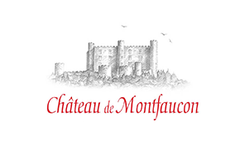
Just across the Rhone river from the beautiful vineyards of Chateauneuf-du-Pape, the Lirac appellation extends itself on the low hills alongside the river. The history of Château de Montfaucon dates back to the 11th century when the castle's first tower was built. The castle's role in history was strategic; the Rhône River was the border between the French Kingdom and the Holy Roman German Empire. Montfaucon was one of many castles and fortresses along the Rhône River constructed to guard the border.
Rodolphe de Pins took over the family estate of Montfaucon in 1995 and subsequently rebuilt the winery and began practicing sustainable agriculture. He honed his winemaking skills in Barossa at Henschke and Vieux Telegraphe in Châteauneuf du Pape before returning to Lirac, so needless to say, his familiarity with the local varieties is well established.
Press Reviews
Wine Align
92 Points - David Lawrason
This is a blend of usual suspects among the white grapes of southern France with marsanne leading at 40% followed by clairette at 35%. It was fermented and aged in French oak barrels which accounts for the quite deep yellow gold colour. The nose is rather reserved but exotic and complex with waxy notes, apricot, orange peel, honey and wood spice. It is full bodied, almost thick, creamy and warming with 13.5% abv. Quite a mouthful, with some sense of wood tannin on the finish. Needs very rich savoury dishes. Excellent length. Tasted Nov 2025
91 points - Michael Godel
Comtesse Madeleine is a blend of marsanne and clairette with lesser amounts of grenache blanc and picpoul, likely named for Marie-Madeleine Pioche de la Vergne, comtesse de La Fayette, a 17th century French writer known for La Princesse de Clèves. Profound is once again the first word to slip from the tongue because neither Lirac nor Côtes du Rhône are normally poised to offer such substantial qualities. Aside from the flinty opening salvo there are wisps and whispers of aromatic complexities in between, all ahead of a maturity and knowing experience showing prominently at the finish. Once again gastronomical scents, of porchetta, herbs and other aromatics coming from this meatiest of white wines. Begins slower and takes longer to reveal its charms than the previous vintage tasted but once momentum makes gains then the stirring is activated. The finish is long and true. Drink 2025-2029. Tasted November 2025.
90 points - Sara d'Amato
This blend of marsanne, clairette, grenache blanc and picpoul, aged 8 months in oak barrels, is named in homage to Madeleine de Montfaucon, grandmother of current owner Rodolphe de Pins, who stewarded the estate for over 60 years. The wine offers a gently aromatic profile: floral notes, fresh linen, a touch of musk, and yellow fruit recalling mirabelle plum. Lanonlin and a lively mineral edge keep it fresh. The palate is fleshy, with oak spice playing a minimal supporting role behind the fruit. Highly drinkable, it gains richness as it unfurls. Features a lingering finish of memorable length. Tasted November 2025.

- Sparkling Wine, White Wine
- Sémillon
- Sustainable, Vegan-Friendly
- Dry
- Light Bodied
- 750ml
- 12.50% alc./vol
About the Winery
Château Haut-Grelot
Château Haut Grelot is located in Saint Ciers Sur Gironde, approximately 50 kms north of Bordeaux, on the right bank of the Gironde Estuary. It was established by the Bonneau family in 1922 and now run but the 4th Generation. Today Château Haut-Grelot comprises 58 hectares of vineyards and is run by Céline and Julien, who was recently awarded the title 'Best Young Talent' in Bordeaux.
The vineyards are made up of sandy-gravel on the hillsides bordering the Gironde Estuary and sand-clay-silt on the hillsides further inland. Blaye Côtes de Bordeaux benefits from an ideal microclimate where there is a high level of sunshine and enough rain to guarantee the perfect environment for grape production. As a result the reds are fruity and concentrated and the whites are fresh, vibrant and delicate.