

29 products
29 products


- White Wine
- Marsanne, Roussanne, Viognier
- Organic, Sustainable, Vegan-Friendly
- Dry
- Full Bodied
- 750ml
- 13.20% alc./vol
About the Winery
Mas Carlot
Mas Carlot is situated in the south of the Rhône Valley, extending across 76 hectares of pebbly land southeast of Nîmes. Originally a 17th century farm, this beautiful estate was resurrected in the 1960's by the Blanc family—it is currently run Cyril Mares of the neighbouring and equally reputable property, Mas Bressades.
The appellation of Costières de Nîmes used to be considered part of eastern Languedoc but the climate, soil, topography and wine are far closer to those just over the river in the Southern Côtes du Rhône. It is now a region very much on the up and is widely recognized as a great source of excellent value wine.
Press Reviews
Wine Align
91 points (2022) - John Szabo, MS
Good volume and fruity depth here on this southern Rhône from Mas Carlot, richly flavoured, properly sapid, and saliva-inducing. I like the broad and rich palate, the long finish. White-fleshed orchard fruit leads and lingers. Top notch, and lovely. Tasted January 2024.
90 points (2022) - Megha Jandhyala
This golden southern Rhône blend is charmingly ripe and fleshy, even comforting, with notes of apples, tangerines, lychee, and toasted bread. The palate is mellifluous and pleasantly full, with a satin silk-like richness and juicy acids. The finish is gently warming, faintly bitter, and delicately textured. Tasted January 2024.

- Red Wine
- Cabernet Sauvignon, Grenache, Merlot, Tempranillo
- Organic, Sustainable, Vegan-Friendly
- Dry
- Full Bodied
- 750ml
- 14% alc./vol
About the Winery
Pago Aylés

Pago Aylés was founded by Federico Ramón, who in 2003 began his dream of classifying this unique land as the first Vino de Pago in the Aragon region. In the Spanish wine quality pyramid, the Pago stands as a top tier or grand cru winery. Just before Federico died, his dream came true in 2010, as Aylés became the 10th Vino de Pago in Spain.
Today his three children continue to produce wines from this special land. The vineyard site has a long history of winemaking, dating back to the 12th century by Spanish monks. Influenced by the River Huerva and the Monte San Pablo mountain, the soil is a mixture of clay, limestone and chalk – ideal for making high-quality wine. Caves, ravines and old river beds can be found all over the estate, which is brimming with wildlife.
Press Reviews
Wine Align
Vintage 2020 - 90 points - John Szabo, MS
Deeply coloured and sweet-smelling, very ripe and sappy red blend from Aylés (merlot, garnacha, tempranillo and cabernet sauvignon), with a solid dose of sweet wood spice and jammy black fruit in an almost new world, California-like expression. The palate is soft and plush, immediately satisfying and inviting with its vague impression of sweetness, and supple, creamy tannins and acids and solid concentration. The finish lingers on espresso-mocha notes, though not in exaggerated fashion. A bold and satisfying, widely appealing wine all in all for current enjoyment or short term hold - this is all about the ripe fruit. Tasted March 2022.

- Red Wine
- Grenache
- Organic, Sustainable, Vegan-Friendly
- Dry
- Full Bodied
- 750ml
- 14.5% alc./vol
About the Winery
Pago Aylés
Pago Aylés was founded by Federico Ramón, who in 2003 began his dream of classifying this unique land as the first Vino de Pago in the Aragon region. In the Spanish wine quality pyramid, the Pago stands as a top tier or grand cru winery. Just before Federico died, his dream came true in 2010, as Aylés became the 10th Vino de Pago in Spain.
Today his three children continue to produce wines from this special land. The vineyard site has a long history of winemaking, dating back to the 12th century by Spanish monks. Influenced by the River Huerva and the Monte San Pablo mountain, the soil is a mixture of clay, limestone and chalk – ideal for making high-quality wine. Caves, ravines and old river beds can be found all over the estate, which is brimming with wildlife.
Press Reviews
Wine Align
90 points - Michael Godel
Unexpected would indicate that strange things are forecast to occur but this garnacha from the large and historical Finca Aylés estate in Cariñena pretty much does the expected. Delivers dark varietal fruit with a mineral streak as salty as it is firm. Crunchy garnacha, full bodied and flavoured for the foreseen and well, expected. Garnacha of empowerment, helping consumers trust themselves and their palates and opinions, ultimately enabling them to confidently make wine purchasing decisions. Drink 2025-2027. Tasted March 2025.
90 points - David Lawrason
From a large and distinguished vineyard, this is a very smart and delicious garnacha. The ripe sweet almost candied nose black cherry, pomegranate juice is also quite floral. Oak is nicely in the background with a hint of mocha and spice. It is quite full bodied and rounded, but also has enough warmth and acidity to give it a sense of freshness and stability. The length is excellent. Might be a bit confected for some. Chill a bit. Last tasted Jan 2026

- White Wine
- Clairette, Grenache Blanc, Marsanne, Picpoul
- Organic, Vegan-Friendly
- Dry
- Full Bodied
- 750ml
- 13.50% alc./vol
About the Winery
Château de Montfaucon
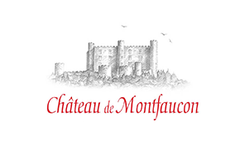
Just across the Rhone river from the beautiful vineyards of Chateauneuf-du-Pape, the Lirac appellation extends itself on the low hills alongside the river. The history of Château de Montfaucon dates back to the 11th century when the castle's first tower was built. The castle's role in history was strategic; the Rhône River was the border between the French Kingdom and the Holy Roman German Empire. Montfaucon was one of many castles and fortresses along the Rhône River constructed to guard the border.
Rodolphe de Pins took over the family estate of Montfaucon in 1995 and subsequently rebuilt the winery and began practicing sustainable agriculture. He honed his winemaking skills in Barossa at Henschke and Vieux Telegraphe in Châteauneuf du Pape before returning to Lirac, so needless to say, his familiarity with the local varieties is well established.
Press Reviews
Wine Align
92 Points - David Lawrason
This is a blend of usual suspects among the white grapes of southern France with marsanne leading at 40% followed by clairette at 35%. It was fermented and aged in French oak barrels which accounts for the quite deep yellow gold colour. The nose is rather reserved but exotic and complex with waxy notes, apricot, orange peel, honey and wood spice. It is full bodied, almost thick, creamy and warming with 13.5% abv. Quite a mouthful, with some sense of wood tannin on the finish. Needs very rich savoury dishes. Excellent length. Tasted Nov 2025
91 points - Michael Godel
Comtesse Madeleine is a blend of marsanne and clairette with lesser amounts of grenache blanc and picpoul, likely named for Marie-Madeleine Pioche de la Vergne, comtesse de La Fayette, a 17th century French writer known for La Princesse de Clèves. Profound is once again the first word to slip from the tongue because neither Lirac nor Côtes du Rhône are normally poised to offer such substantial qualities. Aside from the flinty opening salvo there are wisps and whispers of aromatic complexities in between, all ahead of a maturity and knowing experience showing prominently at the finish. Once again gastronomical scents, of porchetta, herbs and other aromatics coming from this meatiest of white wines. Begins slower and takes longer to reveal its charms than the previous vintage tasted but once momentum makes gains then the stirring is activated. The finish is long and true. Drink 2025-2029. Tasted November 2025.
90 points - Sara d'Amato
This blend of marsanne, clairette, grenache blanc and picpoul, aged 8 months in oak barrels, is named in homage to Madeleine de Montfaucon, grandmother of current owner Rodolphe de Pins, who stewarded the estate for over 60 years. The wine offers a gently aromatic profile: floral notes, fresh linen, a touch of musk, and yellow fruit recalling mirabelle plum. Lanonlin and a lively mineral edge keep it fresh. The palate is fleshy, with oak spice playing a minimal supporting role behind the fruit. Highly drinkable, it gains richness as it unfurls. Features a lingering finish of memorable length. Tasted November 2025.

- Red Wine
- Montepulciano
- Organic, Vegan-Friendly
- Dry
- Full Bodied
- 750ml
- 13.5% alc./vol
About the Winery
Azienda Agricola Jasci
Located on the hills that rise 250 meters above sea level from the Adriatic Sea just above the seaside resort town of Vasto in Abruzzo, here the Jasci family has been growing grapes and producing wine for three generations. Starting In the early 1960s, Pasquale and Maria turned the focus of their farm to producing estate wines.
In 1980, their son Giuseppe decided to convert the farm to organic, becoming one of the first ten wineries in all of Italy to be certified. Today led by grandson Donatello Jasci and his wife Piera, the family is the second largest single grower in all of the region. Donatello’s approach in the cellar is consistent with his farming: clean and simple. The wines see little or no oak and have a purity of flavor that is rare at the price. In addition to his duties at the winery, Donatello Jasci has served as President of the local Organic Growers’ Consortium.
Press Reviews
Millésime BIO 2022
Médaille d'Argent
WineAlign
90 points (2021) - John Szabo, MS
Clean and pleasantly perfumed, lightly floral, with a Mediterranean orange peel twist, Jasci's 2021 organic-certified montepulciano is a plump and appealing wine, fruity, smooth, well-balanced, widely appealing no doubt, And substance it has, too. Nicely done all around. Tasted April 2024.
90 points (2021) - Sara d'Amato
From a family who helped to pioneer organic farming in Italy and one of the first 10 wineries to be certified in the country in the 1980s, this juicy, delicately spiced montepulciano is grown at 210 meters in elevation with a southeastern exposure. Finely crafted, the palate features a savoury edge along with generous, plump black cherry and plummy fruit. Tannins are a bit rustic but the acids are pleasantly refreshing. Notes of laurel and juniper linger on the finish of very good length. A great weeknight pairing for pasta Bolognese or smoked pork chops. Tasted April 2024.

- Red Wine
- Cinsault
- Natural, Organic, Vegan-Friendly
- Dry
- Full Bodied
- 750ml
- 13.5% alc./vol
About the Winery
Domaine Frédéric Brouca
Frédéric grew up in Normandy and met his Canadian wife Elaine at university in Lille, Northern France. They live a nomadic lifestyle (Canada, India, Singapore and USA) though Frédéric spends about half of his time in Faugères. Since early age, Frédéric had a calling for farming and the fierce desire to become a winegrower. After completing a Masters Degree in Finance in 2001, Frédéric went back to college for a Sommelier diploma and started his career as a Burgundy wine broker.
In late 2012, Frédéric and Elaine were fortunate to take over 25 acres of old vines in Faugères, organically farmed for twenty years and deeply rooted in schist soils.
2013 was the inaugural vintage for Domaine Frédéric Brouca. In his modest winery in the village of Laurens, Frédéric is creating a new vision for Faugères wines; fresh, vibrant and made without artifice. Nothing revolutionary, simply returning to our grandparent's ideology of farming and winemaking to craft 'Vins Vivants'. The Faugères Appellation is in the heart of Languedoc in the Hérault department. Here, winemaking dates back to the Greek times and was developed during the Roman Era. It wasn't until the early 1900's, however, that the wines became more widely known for its unique schist soils and moderate Mediterranean climate. These villages are heavily reliant on wine as an important part of their culture and economy.
The area is stunning with mountain views and close proximity to the Mediterranean Sea (20 miles / 30 kms). Faugères has a long history of responsible farming. It boasts the highest percentage of organic vineyards for any AOC in all of France with almost 50% of farmers making the choice.
Press Reviews
Wine Align
92 points (2021) - Michael Godel
Samsó Seulle is varietal cinsault from 40-plus year-old bush vines on the 'La Serre' hill in Faugères. At the higher end for whole cluster ferments in the Fréderic Brouca range, here at 70 percent. Samsó is the local name for the grape and Brouca goes gentle and slow in his trenchant intention on how to deal with extracting without shock and awe. The grapes and thus the wine come out soft and “glissement,” even while the swarthy volatility runs knowably high. Brettanomyces yeasts are simply, allegedly and unequivocally part of the fabric but because flavours and textures are so pretty there is no chance of brittle or crumbly tannins. And so the overall effect is good, generous and proper. At least once in your lifetime your vinous imperative is to try a wine like this, especially from Brouca. Drink 2024-2028. Tasted January 2023.
92 points (2021) - Sara d'Amato
Named "Samsó" the local name for cinsault (and phonetically very similar), Brouca's fruit is sourced from organically grown, old vine cinsault that is over 40 years of age. Often vinified with a good deal of whole-cluster giving the wine its necessary grip and then slowly matured in neutral vessels to preserve the varietal character. There is more wildness in this cuvée than many of Brouca's others, with a palate that is brimming with dried earth, wildflower, and fresh herbs, along with a touch of mushroom and musk. A notably pure expression of grape variety and features the concentration one might expect from a low-yielding drought vintage. Notes of cherry, fennel and licorice root permeate the finish of very good length. Best now to 2028. Tasted January 2024.
91 points (2021) - David Lawrason
This is an organically grown single vineyard cinsault, a variety making paler, red fruited wines. It has a distinctive, soft ripe nose of strawberry jam, very floral lilac/peony, a touch of char and earth. There is also some meatiness expressed more on the palate. It is medium bodied, supple, warm and generous with slightly gritty tannin. Excellent fruit concentration and length. Tasted January 2024
90 points (2021) - John Szabo
Pure old vine cinsault (aka samsó) from the south of France, organically farmed and handled minimally, Brouca latest 2021 is a typically wild and vibrant, crunchy and juicy red declared at just 12.5% alcohol, part philosophy, part cooler, wetter vintage no doubt, and all the more lively for it. The palate is notably gritty with light but angular tannins bouncing off tingly acids, containing a mouthful of tart red fruit, from red currant to sour cherry, free from oak influence, but featuring lots of wild savoury herbs and twiggy flavours. The finish lingers surprisingly for such a light wine. Chill lightly and serve over the next 2-4 years. Authentic and honest; I like the lift and transparency. Tasted January 2024.

- White Wine
- Grenache Blanc, Picpoul, Viognier
- Organic, Sustainable
- Dry
- Residual Sugar: 0 g/l
- Full Bodied
- 750ml
- 11% alc./vol

- Red Wine
- Grenache, Syrah
- Organic, Sustainable
- Dry
- Residual Sugar: 2.00 g/l
- Full Bodied
- 750ml
- 14.00% alc./vol
Press Reviews
Wine Enthusiast
90 Points — Reggie Solomon
This is a wine to pair with an evening of contemplation. Blackberry, black plum and dried black cherry swing dance in lockstep on the nose with an undercurrent of forest floor that lends added depth. Silky in texture, the wine flirts with Darjeeling tea and a dew-glistened earthy core that shines.

- Red Wine
- Tempranillo
- Organic, Sustainable
- Dry
- Residual Sugar: 2.00 g/l
- Full Bodied
- 750ml
- 14.9% alc./vol
Press Reviews
Wine Enthusiast
92 Points - Mike DeSimone
Deep ruby in the glass, this wine has a bouquet of cherry preserves, milk chocolate and dried marjoram. Mint and eucalyptus notes dominate the taste profile alongside notes of black cherry, mocha, tarragon and lavender. Brawny tannins are kept in check by energetic acidity. Best Buy.